
Junior Year: Compiled Advice from All-Nighters
Supposedly the "epitome of stress," junior year made me question my intelligence and ponder my life choices. Here’s everything I learned.

”It’s over.”
The #1 phrase I deployed this last year, my personal brain-rot slang, my go-to hallway conversation-starter after every assessment.
Frankly, it was never really over. Eventually, I crossed the finish line with good grades, cool awards, and a compilation of humorous moments from all the times I broke down due to AP Latin.1 But now — 9 months and 17 all-nighters later — junior year is truly over. I have exited the ivory gates of hell; 83% of my time at Harvard-Westlake has passed.
Junior year is often known as the “hardest year of high school”. You take the hardest classes, try the most extra-curriculars, grind out the SAT/ACT, probably go on the lookout for an internship, et cetera. You are expected to wear as many hats as possible without tipping your whole hat-stack over, completing as many side quests that will paint an adequate picture for the mighty college application without blowing your brains out. Junior year is “the part where mental stability meets talent”, to quote Kendrick Lamar.
So before I head off to a few intense weeks of crying over Sibelius’ fingered octaves music camp, I thought I would ink out a more lighthearted post than what I’ve been writing on here recently, something that compiled all the bits and pieces of advice that I jotted down during all my 3 AM study sessions this last year. Here are the most notable things I learned from all 17 all-nighters — advice for both junior year and stressed-out people alike.
1. You aren’t running out of time. You are running out of energy.
I have always believed the following: if I had twice as many hours in a day, I would do twice as many things. That was my Newton’s Fourth Law — my personal truism across time, space, and whatever dimension my work would travel to. All that mattered was seconds — the more, the better.
Pretty soon, I realized that that was a reductive approach. It didn’t matter if I had ninety hours a day because I couldn’t make it through the first six. By the seventh hour, I was either passionately clenching a cup of coffee or crashed in the corner of Silent Study. No in-between.
I am not the worst example. A friend who lives in Kansas can’t get out of bed without a caffeine pill. Presumably, he began as I did — pulling an all-nighter, needing a stimulant to catch up, getting the afternoon crash, increasing his caffeine dosage to recover, building up a tolerance, trying out a Celsius, continuing to spiral his way to a heart attack.
No matter how much caffeine I consumed, the stimulant could not replace the restorative effects of true sleep, the recoveries I needed after each all-nighter. Absent actual rest, my work patterns became increasingly inefficient; during my energy highs, I would waste my time by jittering in my seat, running around randomly, and joining random yap-fests; during my energy lows, I sat defeated as I pushed through my work, struggling to focus and eventually folding to a looming 10-minute nap. As such, caffeine made my energy levels resemble sine or cosine — never truly stable, always uneven, and inevitably bound to dip.
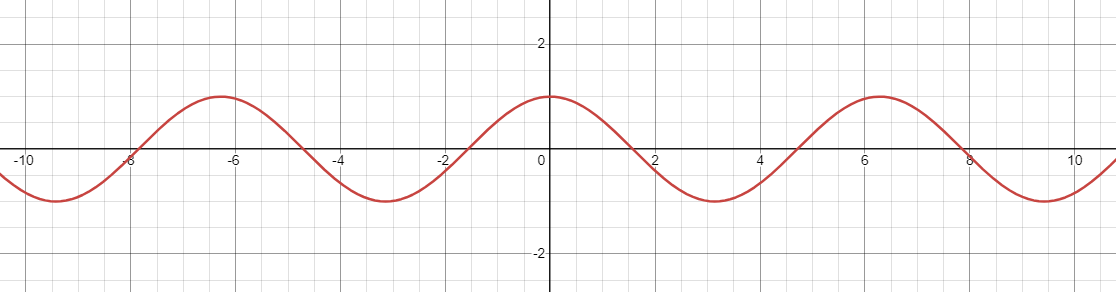
So don’t get on coffee, don’t pursue the all-nighter, and don’t get into this horrible cycle. That’s the first and foremost tip of junior year.
2. Sorry, but it will not “all be fine.”
The most common piece of advice I have gotten throughout my brief lifetime: “It will all be fine, stop worrying.”
It’s probably true. No matter what happens, most of us lucky-ducks that attend privileged private institutions will have no problem seeing wonderful opportunities down the line. Sure, we won’t be guaranteed POTUS or the Fortune 500, but few of us will truly end up as Arthur Fleck.
That being said, the idea that it would “all be fine” was extremely harmful for me. As much as I used the advice to comfort myself in times of stress, I also used it as false assurance that I could begin a 4-hour long debate on universal healthcare and still finish my history research paper without an all-nighter.
Better known as procrastination, this disease plagued my junior year. It infected my coursework, my extracurriculars, and my hobbies. Confident that “it would all be fine,” I refused to begin important work until the very last minute. I was strung with the belief that if I waited until the last 5 minutes to complete a 5 month foreign policy paper, the paper would take 5 minutes. How mistaken I was.
The problem with junior year is that things keep getting thrown at you. If you don’t tackle an inbox item on Monday, chances are you’ll miss it Tuesday, ignore it Wednesday, and forget it Thursday. By Friday, you might find yourself frantically memorizing 1200 lines of Caesar in less than 24 hours.
We procrastinate because we find that tasks are daunting. We don’t respond to emails because we aren’t 100% sure what to say. We don’t start huge assignments because we just don’t feel “locked in” yet. As a result, we use excuses like “it will all be fine” to infinitely delay our work. We ghost emails, miss assignments, and pull all-nighters for deadlines.
To some degree, I procrastinate because I like it. Ironic as it seems, something about the panic monster that suddenly appears right before a major deadline, the sudden wakefulness to get going, and the ultimate I-didn’t-think-I-could-finish-but-I-somehow-did high all make procrastination a rather thrilling habit for me.
But at the cost of more stability? At the cost of ruining my sleep schedule and running out of energy? No thank you.
I'm starting to see that all I have to do is get up and go
Goin', goin', goin', before I'm gone
— Mac Miller, “Surf”
These days, I’d rather tell myself that it won’t “all be fine.” I better get going.
3. No offense, but your brain just isn’t all that.
I don’t consider myself to be unorganized. I have a planner, sort out my subjects well, and rarely lose important documents. But on many early 5 A.M. mornings — the ones where my half-closed eyes are darting across a textbook memorizing the last couple topics of an important exam — I question whether I am truly that organized intellectual I once narcissistically thought I was.
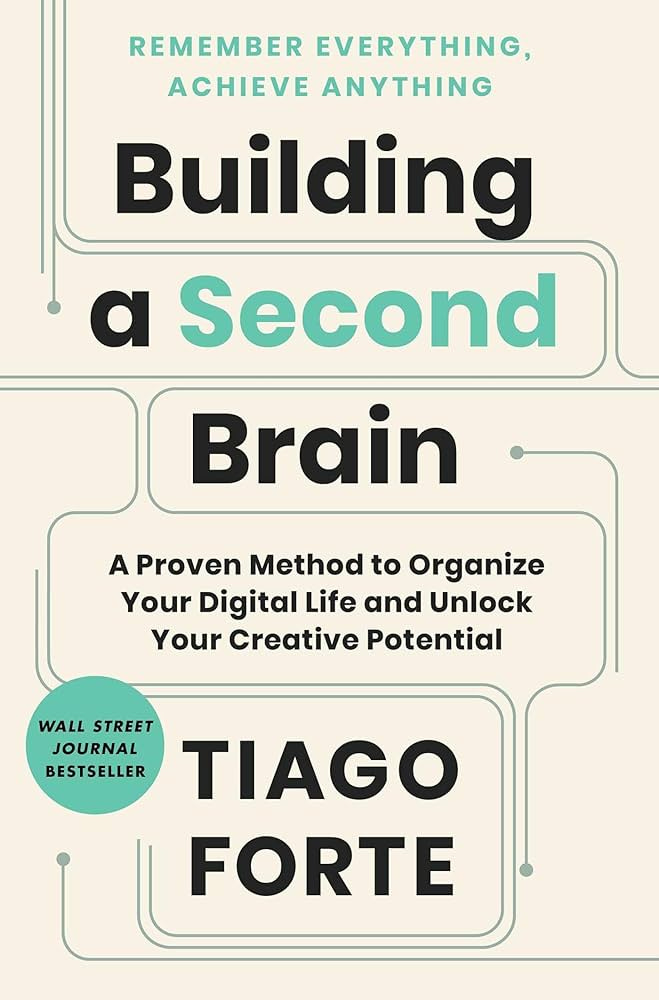
A summer or two ago, I spent quite a bit of time reading self-help books, the advice of which seemed to fly straight over my head. In the suffering of junior year, I revisited the words of Tiago Forte’s Building a Second Brain.
Humans have limited memory. We aren’t computers, and we don’t have 500 gigabytes to store full datasets in our small brains. In fact, I myself struggle remembering the few Reimann Sum formulas for arc length, disks, and washers, let alone the laundry list of tasks that make up junior year.
Forte’s advice was this: take only the truly noteworthy ideas, put them in a database like Notion, highlight your interpretation of those, simplify that interpretation, and repeat. In due time, information will become easy to remember.
In other words, two takeaways:
Write stuff down.
Simplify.
What I did right there was an example of Forte’s advice in action. I took two sentences filled with adjectives and descriptors and collapsed their ideas to two tiny bullet points. As such, my points became simpler, my life slightly easier.
This could be applied to any academic studying, but I found it even more useful on the level of planning. Instead of creating elaborate schedules bombarded with the 800+ tasks that appeared in my inbox over the week, I would group things, simplify tasks, and compress things to make my life seem easy. And in that way, I didn’t have much to remember or retain in my head. Everything was easily tucked away somewhere on my planner, my second-brain.
4. The numbers 93 and 100 both show up as an ‘A.’
A 93% average in a class is not perfect. You got most stuff right, studied quite hard, and earned a gold-star for figuring out how to beat everything but a sliver of the course.
A 100% average is perfect. With the exception of some extra-credit possibilities, you quite literally did not misunderstand a single thing about the course.
An 86% to a 93% and a 93% to a 100% both require a 7% jump. But the latter? Far harder. Because the closer you get to perfection, the harder it becomes.
There’s a principle called the law of diminishing returns. Adding “more” won’t always produce more, and as you get better and better, the same amount of work produces less and less change. It’s easy to start reading your history textbook to get a few more multiple-choice correct, but almost impossible to literally memorize Howard Zinn that even the most niche questions won’t throw you off.
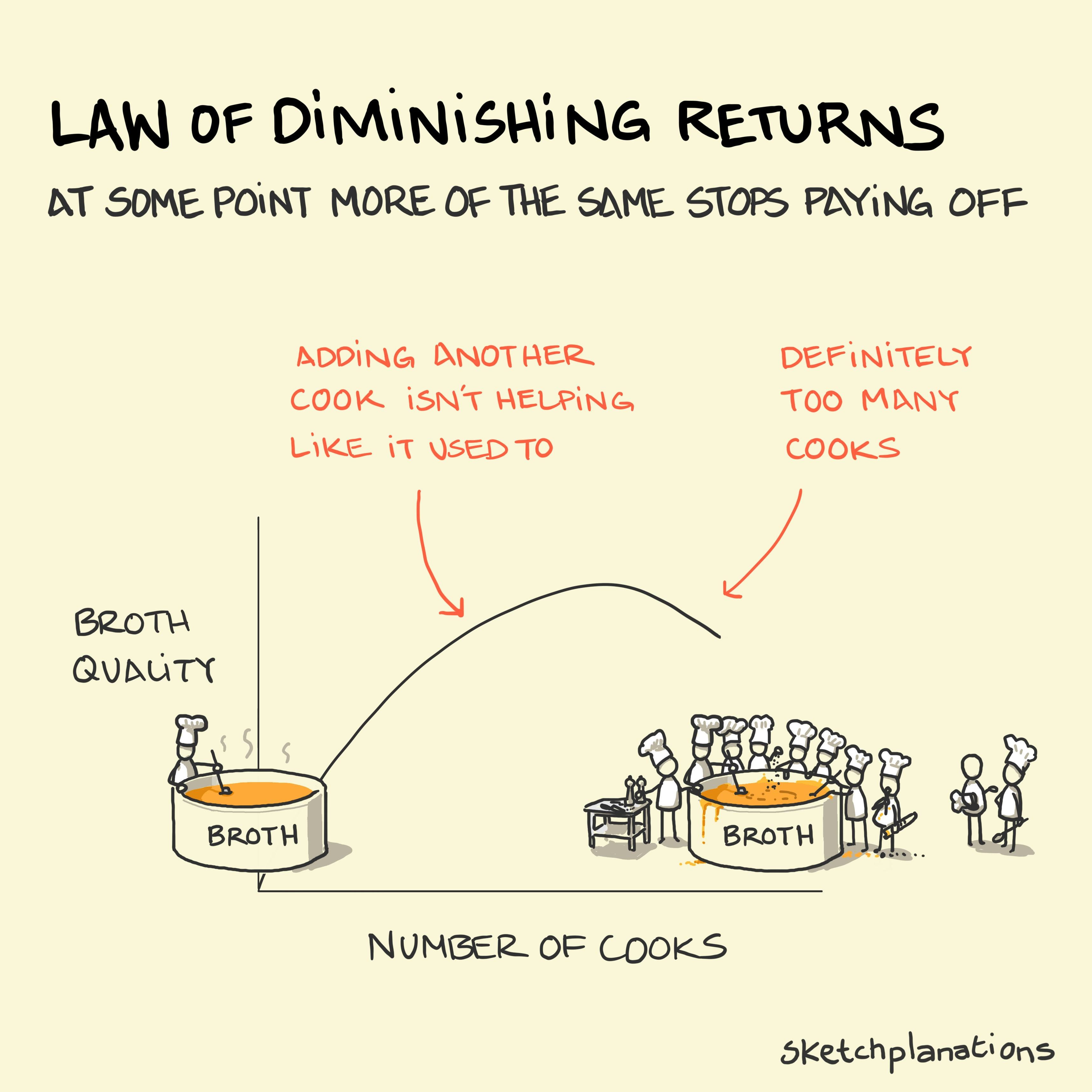
Yes, memorizing Howard Zinn is ridiculous. And so is the opportunity cost of time that you could’ve spent studying other subjects, going for a run, playing blackjack, watching AI-generated LeBron, literally anything. That investment for the absolute 100% — when you already had a 93% — would be useless.
Of course, most aren’t obsessive enough to actually care about the final 7% in their courses. But in almost every other activity — sports, instruments, et cetera — there is no clear cutoff or threshold, no 93% that calls it a day. And as a result, many surpass the point of diminishing returns, burning themselves out when they don’t need to.
“The perfect is the enemy of the good.” — Voltaire
And so, as shown in the illustration, too many cooks means you aren’t cooking.
5. Look back, look forward, look around.
One of my more recent posts was on the importance of looking at your past to produce purpose, reflecting to create meaning. When we see how far we’ve come, we understand the meaning of living better, the joy in all those around us.
That keeps you going a lot in your junior year. There will be times in which life seems suffering, in which school feels like a cold, wet blanket draped over your life. But to appreciate the happier moments at other times, to listen to music that made you once smile, to think about friends that you had funny times with — all of that will give you a sense of meaning in a meaningless year.
Look forward too. Find the excitements you anticipate in activities, the places you would like to go, the life you imagine yourself to live. For me, my imagination of Greece two weeks before the trip kept my engine running for the last classes before spring break, and my excitement for the TOC pushed me through the horrible test weeks of April.
Besides, time moves fastest when you are busy. Any moment of endless, insufferable grinding will eventually end so long as you keep your head up and don’t stop. In fact, with junior year as fast as it is, you shouldn’t forget to look around and enjoy the small day-to-day joyful moments that won’t come back to you later. Because frankly, if it wasn’t for the ironic humor in my AP Calculus BC class, the trolling in my AP Chemistry class, or the dumbest conversations in dark practice rooms, I wouldn’t have made it.
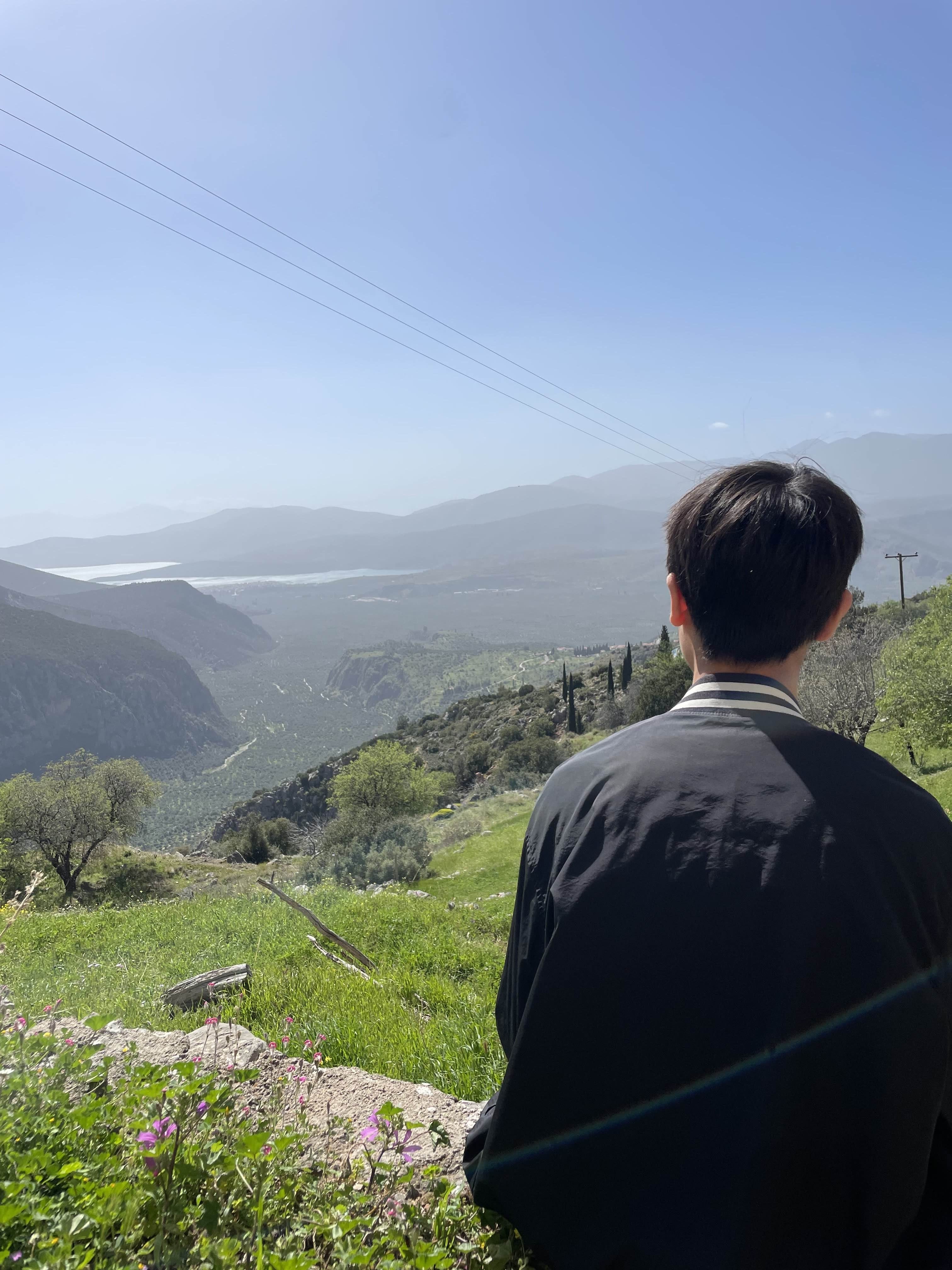
My favorite memory from the year was while “looking around” on that Greece trip. Atop a ridge in Delphi, I remember something so special about that mountain range view, something that deeply influenced my perspective on life. Frankly, when I saw something that large and beautiful in our world, I noticed: all those academic terms and debate buzzwords truly meant something more than myself. That view was a call to humility, a call to zoom out of the vacuum or black hole of junior year work.
6. You aren’t special.
From a very young age, we are told that we are unique. We are individuals that have our own experiences, our own thoughts, our own interests.
What we don’t get told enough as how much we all are the same. Because truly, everyone gets stressed whether it’s junior year of high school or your second day of investment banking. No matter what, we’re all united in that matter.
So next time you face an unconquerable mountain of work, next time you punch the air as you gaze upon an imperfect transcript, remember that you aren’t alone. Everyone has felt like that. Even those with seemingly perfect achievements can sometimes be so used to perfection that they never feel complete.
Junior year will test your limits. It will push you to pull all-nighters, encourage you to abuse caffeine, and convince you to give up. But with healthy sleeping habits, time management, and the correct mentality, it may not be so bad after all. It may not be truly “over.”
Ablative of cause.